
Roughly 25 percent of school leaders attributes visible security officers to reducing safety issues. This clearly shows the role of presence in protecting students and staff. This piece delves into practical school security in Los Angeles, focusing on community-based solutions. David Shield Security appreciates the unique needs of Los Angeles schools, such as Jewish institutions. They aim to provide safety services that respects cultural values while supporting safety. For more information, visit davidshieldsecurity.com.
School Security In Beverly Hills
The core objectives are clear: safeguard students, teachers, and families; support uninterrupted learning; and pair noticeable protection with subtle protective steps. Trained officers act as both deterrents and trusted campus resources. Integrated security tools, like linked surveillance and detection tools, speeds up investigations, improving response times and information sharing.
Real-world campus operations are essential. Using visitor management and online tools demands reliable permission controls. Such controls are vital to safeguard sensitive information from unauthorized access, even from bot-driven attempts.
In the sections below, we will look at present safety concerns, forward-looking measures, and site-specific security options for Los Angeles schools. We will also cover community programs and practical actions for school leaders to improve safety right away.
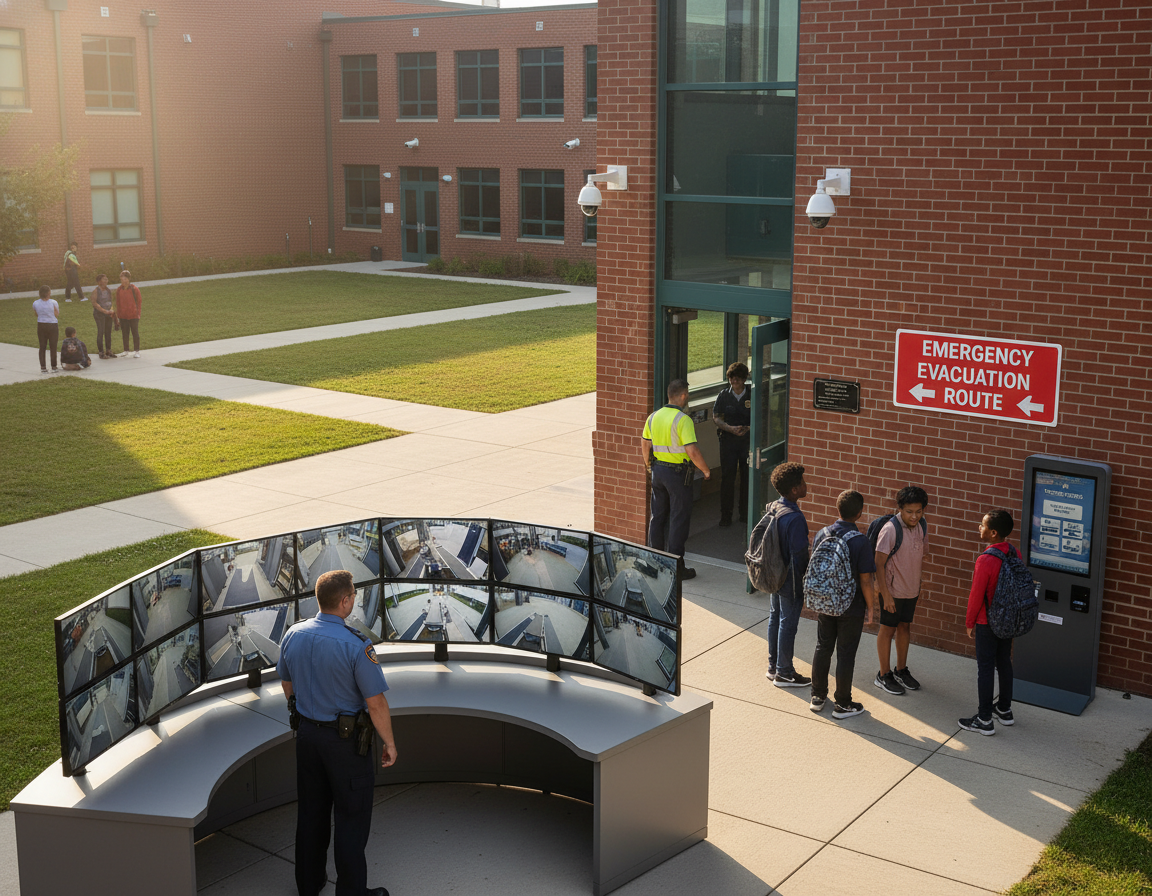
Assessing The Environment Of School Security In Los Angeles
Educational campuses in Los Angeles face a wide mix of safety concerns, from routine disturbances to specific security risks. Administrators and campus teams must navigate these challenges while being sensitive to the different concerns of their communities. They start by identifying area-specific concerns and implementing measures that safeguard young people while supporting a positive school setting.
Present Threats And Risks Facing Los Angeles Schools
Aggression, theft, destructive behavior, and interruptions are common, impacting learning and resources. Campus safety officers and campus monitors act as a noticeable preventive presence and move fast to incidents. Online security concerns, such as improper entry to school portals, highlight the need for a complete strategy to security.
Local Context: Urban Crime, Targeted Threats To Faith-Based And Cultural Institutions
Los Angeles’ dense, diverse nature means crime can change widely by location. Community-based cultural institutions may experience particular threats that require discreet, community-conscious protection. Schools serving these communities benefit from tailored programs that respect their traditions while ensuring robust security.
Policy And District Policies Affecting Campus Safety In California
California regulations and school district rules dictate standards for visitor management, access control, emergency drills, and training. Administrators must match their plans with these rules, covering requirements for armed personnel, student privacy, and drills. Well-organized documentation is essential to staying aligned with policy and improving incident response.
| Category | Common Risks | Useful Measures |
|---|---|---|
| Physical campus | Destruction, theft, improper entry | Controlled access points, trained patrols, visitor check-in |
| Online systems | Login breaches, unauthorized network activity | Strong login controls, watched portals, employee training |
| Community-specific risks | Intimidation, coordinated threats toward cultural institutions | Discreet security presence, liaison with community leaders, tailored school protection services |
| Policy compliance | Policy gaps, unclear roles | District-policy alignment, compliance review, recorded response plans |
| Response and investigation work | Slow incident resolution, fragmented info | Unified video/voice/sensor systems, coordinated response teams, regular audits |
Campuses need to review threat profiles, community expectations, and district constraints when choosing security solutions. A practical security plan combines visible presence, technology, and clear safety protocols. This mix limits interruptions and strengthens reassurance among students, staff, and families.
Proactive Security Measures For Schools And Campuses
Effective campus safety depends on a mix of people, technology, and practice. Begin with clear goals and regular security assessments to direct the plan. Administrators who take proactive steps can reduce response times and minimize confusion during emergencies.
Clearly Present Security Presence: Trained Guards And Patrol Strategies
Experienced campus guards work as deterrents and first responders. Implement roving patrols, stationed guards, and scheduled student interactions to build familiarity and trust. Security personnel should receive training in conflict resolution, emergency response, and positive interaction to support both safety and school climate.
Modern Tools Integration: Cameras, Sensors, And Unified Communications To Speed Investigations
Current surveillance systems, analytics, and secure storage improve evidence collection. Automated sensors and instant notices help spot unusual activity quickly. Unified communications platforms, like those from Motorola Solutions, help make sure critical information gets to the right people promptly, significantly reducing investigation times.
Controlled Access And Visitor Management Systems For Schools
Implement ID checks, digital visitor logs, and screened access at entry points. Digital visitor tools produce audit trails that support law enforcement and administrators post-incident. Pair electronic controls with physical barriers and staff training for stronger outcomes.
Crisis Response Planning And Drills Tailored To School Settings
Create specific plans for active assailant events, medical crises, fires, and natural disasters. Run regular drills with security staff, administrators, and local law enforcement. Create redundant communications and assign clear roles to help ensure everyone knows their part in critical moments.
Ongoing training and coordination are key to a cohesive approach. When school security companies in LA provide combined personnel and technology training, campus safety becomes more effective. Consistently checking and refreshing security measures ensures plans continue working well.
Campus Protection In Los Angeles
Los Angeles schools and cultural learning centers require tailored security plans. These plans must reflect the distinct threats of each neighborhood and community. They need to honor cultural practices while supporting the safety of students and staff. A thorough assessment directs the selection of technology, staff, and community engagement strategies.
Customized Solutions For Los Angeles Educational Institutions And Cultural Communities
Strong campus protection programs begin with a detailed risk assessment. Security teams review the campus layout, commute routes, and event calendars. This makes it easier to develop plans that cater to the specific needs of each school population.
Programs for faith-based schools and cultural centers must balance visible deterrence with community sensitivity. David Shield Security provides specialized services for Los Angeles institutions. They focus on building trust and respect through their outreach and presence.
Importance Of Specialized School Security Companies In LA: Services, Armed Vs. Unarmed Options, 24/7 Coverage
Los Angeles school security providers provide a broad set of services. These include armed and unarmed officers, 24/7 monitoring, campus patrols, visitor management, and emergency response coordination. Campus security firms like California Panther Security emphasizes the importance of trained officers who engage positively with students and staff.
Choosing armed personnel involves legal review, district policy checks, and community input. A number of schools choose unarmed officers, supported by rapid law enforcement response. Schools with stronger threat profiles may select armed protection after thorough review and approval.
Budgeting And Scalable Programs For Schools Of Different Sizes
Cost-conscious school safety plans should offer tiered options. This allows small private schools, larger districts, and cultural learning centers to select the right level of protection. Schools can combine part-time guards, volunteer parent patrols, and targeted technology to make budgets go further.
Small trial programs help measure effectiveness during peak times, like arrival, dismissal, and special events. Ongoing risk assessments help ensure spending is directed toward the most effective risk reduction measures.
| Program Type | Usual Support | Cost Drivers | Most Suitable For |
|---|---|---|---|
| Starter Program | Limited-hours unarmed officers, guest check-in, safety signs | Hourly guard rates, minimal tech | Private schools, enrichment programs |
| Standard Tier | Dedicated officers, camera coverage, entry controls, family patrol support | Officer coverage, technology installation, software charges | Mid-sized schools, charter campuses |
| Advanced Tier | Armed or mixed staffing, 24/7 monitoring, emergency response plans | Licensed armed officers, monitoring subscriptions, training | Large institutions, locations with higher threat concerns |
| Specialized Programs | Special event coverage, cultural awareness training, community coordination | Program size, expert training needs | Religious schools and cultural centers |
Start by defining a clear scope, run a short pilot, and keep open communication with parents and staff. Transparent budgeting and the use of Los Angeles school security solutions support communities in selecting the right mix of services. This ensures programs grow as requirements change.
Community-Oriented Approaches And Student Safety Initiatives
Strong campus safety is strengthened by partnerships. Administrators, parents, and the Los Angeles Police Department meet to discuss plans and review incidents. That partnership supports stronger relationships, supports transparency, and enhances community-oriented school security.
Shared-response models close coordination gaps and clarify roles in emergencies. Combined exercises and mutual incident reporting coordinate police procedures with district protocols. Operational partners like California Panther Security function as operational partners, strengthening local ties and enhancing student safety.
Training for staff and security personnel emphasizes de-escalation, adolescent psychology, and cultural sensitivity. Campus officers support students with everyday needs while supporting campus security. Ongoing refresher training keep safety protocols are practical and humane.
Programs centered on students support reporting and awareness. Anonymous tip systems, anti-bullying campaigns, and digital safety lessons support students. Wellbeing and counseling services provide alternatives to punitive responses, strengthening prevention efforts.
Campus safety reviews support continuous improvement. Scheduled reviews, incident reviews, and technology upgrades adjust patrol patterns and system placement. Unified communications and analytics speed investigations, supporting school security.
Open communication with families makes safety measures understandable and accountable. Scheduled communications outline safety protocols and privacy protections. Parent and staff involvement into budgeting and program reviews helps ensure school security matches community expectations.
Final Thoughts
Keeping Los Angeles students and staff safe requires a multi-faceted, community-focused strategy. Educational security across Los Angeles is strengthened by bringing together trained personnel, cutting-edge technology, and clear policies. It also requires active collaboration with families and law enforcement. That strategy keeps schools focused on education.
David Shield Security teams provides customized, respectful security solutions for educational and cultural institutions in the area. Their services focus on school protection services and Los Angeles school security solutions. These protective measures respect privacy while boosting situational awareness and speeding up investigations.
Administrators should start with a thorough security assessment. After that, they can emphasize low-cost, high-impact measures like visitor management, visible patrols, and emergency planning. Combining practical technology with continued training is key to improving school security. That helps create safe, welcoming environments for students.
School protection is an evolving responsibility that requires continuous improvement. Regular audits, staff development, and community engagement are vital for maintaining effective security programs. Through ongoing review and strong partnerships, Los Angeles schools can strengthen school protection services. This supports safer learning environments for all students. For more information and consultations, visit davidshieldsecurity.com.
Related: Best SEO Company Los Angeles