
Timber Framing Contractors Insurance: What Should Be Covered
Timber Framing Construction:Timber-Frame Building.
Nearly 40 percent of the most historic wooden buildings in the United States use traditional joinery, rather than nails. It’s a clear sign of the strength of timber-frame construction.
Here you’ll see why timber framing offers practicality and longevity. It employs sustainable materials and classic joinery delivers benefits of timber framing for residences, barns, outdoor shelters, and business spaces.
We’ll cover methods of timber-frame construction, from traditional mortise-and-tenon to new CNC and SIP techniques. You’ll learn about the background, methods, materials, design, and build process. We also describe modern upgrades that enhance energy performance and durability.
If you’re looking into timber frame design for a new home or a commercial site, this guide is for you. It’s a Timber Framing 101 that helps with planning and ensures lasting craftsmanship.
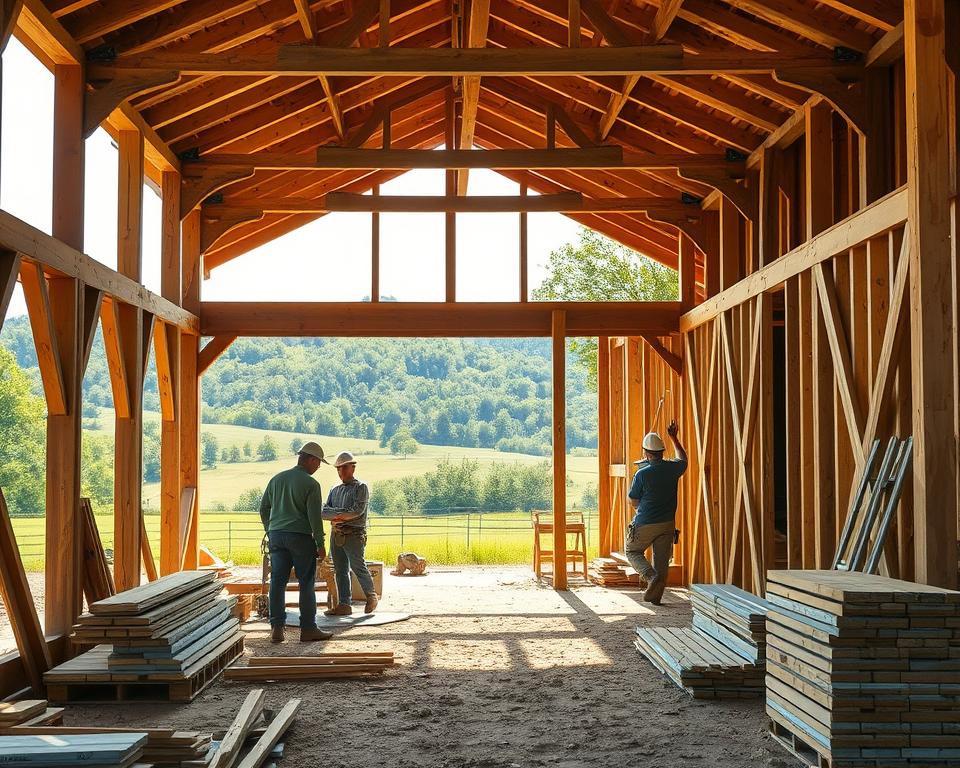
Key Takeaways
- Sustainable materials + proven joinery = durable frames.
- Methods span classic mortise-and-tenon through CNC-assisted production.
- Timber frame architecture suits residential, agricultural, and commercial applications.
- SIPs and continuous insulation improve efficiency while preserving style.
- This guide provides a U.S.-focused, practical overview of history, materials, design, and construction steps.
Timber Framing Defined
Large timbers with pegged joints define timber framing. Unlike stick framing with 2x4s, this system relies on massive members. The result is a structural skeleton carrying roofs and floors.
It’s known for its long-lasting frames, thanks to precise joinery and craftsmanship. This system allows for fewer walls and bigger, open spaces. It’s loved in both old and new buildings.
Core Principles
At its core, timber framing organizes timbers into a clear structure. Wooden pegs lock mortise-and-tenon joints for stability. Loads travel through posts and beams to foundations, reducing partition needs.
Key visual and structural characteristics
Expect oversized members and expressed structure. Vaulted interiors and articulated trusses are common. Frames frequently feature 8×8 or larger sections for presence and capacity.
These frames span wide spaces with trusses and post-and-beam layouts. Some projects use steel connectors for a mix of old and new. Tight joinery plus pegs delivers strength with controlled movement.
Why the craft endures
It marries strength, longevity, and beauty. Old buildings show how well it stands the test of time. Responsibly sourced wood supports sustainability goals.
Rising interest stems from aesthetics and ecology. Modern builders mix old techniques with new engineering. This way, they meet today’s building standards while keeping the traditional craft alive.
Timber Framing Through History
Timber frame architecture has deep roots that span continents and centuries. Roman evidence reveals refined joinery. Egyptian and Chinese examples predate the Common Era, proving early sophistication.
Medieval Europe favored oak/ash for halls, houses, and barns. Skilled carpenters in England, Germany, and Scandinavia made precise joints and pegged frames. These frames have lasted for hundreds of years, showing the history of timber framing.
Rituals and marks grew with the craft. The topping-out ceremony, starting around 700 AD in Scandinavia, celebrated roof completion with speeches and toasts. Layout and identity marks traced guild lines and families.
Religious buildings show the craft’s longevity. Jokhang (7th c., Lhasa) stands among the oldest surviving frames. They unite cultural meaning with structural longevity.
Industry transformed building. New sawmills and mass-produced nails led to balloon and platform framing. Speed and cost shifted mainstream housing away from heavy timber.
The 1970s sparked a revival. This was due to environmental concerns and a love for craftsmanship. Today, timber framing is used in specialty homes, restorations, and high-end projects. Modern designers mix old joinery with new engineering to keep the tradition alive.
The story of timber framing spans ancient ingenuity, medieval mastery, ritual practice, and modern resurgence. Every period contributed techniques and ideals sustaining its appeal.
Contemporary Timber Framing & Innovation
In the 1970s, people wanted simpler, more natural homes. This led to a renewed interest in timber buildings. It also brought new methods that meet today’s energy and durability needs.
Environmentalism plus craft revival fueled adoption. Wood’s renewability and carbon storage resonated. This move made timber framing a key part of green building discussions.
Digital Craft Meets Tradition
CAD/CAM and CNC tightened tolerances. Precision cutting preserves classic joints. Kitted frames trim site labor and material waste. Timber + steel/engineered parts offers speed and flexibility.
Energy & Envelope Upgrades
Engineered members and better insulation stabilize frames. Movement drops while durability rises. Modern timber framing now combines old aesthetics with high efficiency, thanks to innovations in insulation and HVAC systems.
| Area | Traditional Approach | Modern Innovation |
|---|---|---|
| Joinery precision | Hand-cut mortise and tenon | CNC fabrication with QC |
| Envelope Efficiency | Minimal insulation between posts | SIPs/continuous insulation with high R |
| Erection Speed | On-site full assembly | Precut/kit systems for rapid raising |
| Connections | All-wood connections | Hybrid connections using steel plates or bolts |
| Moisture Strategy | Basic venting | Airtightness, mechanical ventilation, drying plans |
Sustainable timber framing now combines old craft with modern engineering. This approach creates resilient, efficient buildings. Codes are met without losing tradition.
Where Timber Frames Shine
A versatile system across building types. Owners choose it for aesthetics, spans, and legible structure. Here are some common uses and what makes each type stand out.
Residential: timber frame homes
Expect open plans, exposed members, and lofty ceilings. Generous glazing admits abundant daylight. Interiors feel bright, warm, and inviting.
Builders mix timber framing with SIPs or regular walls to meet energy standards. Owners value beauty, longevity, and spatial openness.
Working Structures
Barn frames create unobstructed storage and stock areas. They use heavy posts and beams to support wide spans without many supports.
They’re robust and maintainable. Many choose to use old timbers for their authenticity and strength in farm settings.
Civic/Commercial Spaces
Pavilions, breweries, churches, and halls suit timber framing. It excels where clear spans and expressed structure matter. Designs like arched trusses add charm.
Teams leverage timber for enduring public rooms. These spaces are efficient and feel human-sized. Adaptive reuse highlights original frames.
Variants & Hybrids
A-frame timber construction is perfect for steep-roofed, simple buildings like cabins. Log-and-timber hybrids combine log walls with frames.
Half-timbered buildings have exposed wood on the outside and masonry or plaster inside. Timber with stone foundations offer a mix of old and new. Together they reveal broad versatility.
Techniques & Joinery
Traditional timber framing is a mix of art and science. Joinery choices match scale and function. Below are key methods and their modern counterparts.
Classic M&T
Mortise and tenon joinery is key in many historic frames. A cut mortise fits a matching tenon. Wooden pegs secure the joint, making strong connections without metal. Traditional tools shaped and fitted these joints.
Today CNC equipment produces accurate joints. Labeled parts streamline raising. This keeps the traditional joinery’s strength but cuts down on labor time.
Post and beam versus traditional joinery
Post-and-beam relies on large load-bearing members. Builders often use steel plates, bolts, and modern fasteners. This makes building faster and easier for contractors used to modern methods.
Pegged systems demand high craft. They deliver continuous timber aesthetics and tight geometry. Pick based on budget, schedule, and style.
Common truss types
Trusses define spans and volumes. King-post solutions suit modest spans. A single king post provides clarity and economy.
Hammer-beam forms achieve dramatic spans. Cantilevered beams reduce the need for long ties. Bowstring/arched ribs enhance long-span grace.
From Shop to Site
Hand-cut joinery respects tradition. CNC adds repeatable accuracy. Prefabrication and labeled parts make raising buildings efficient and safe. These methods show how timber frame construction evolves while keeping its core values.
Materials & Species
Choosing the right materials is key for timber frames. It affects strength, looks, and how long they last. Quality timber and the right materials keep structures stable for years. This section covers common species, grading and drying, and useful materials for a strong build.
Typical Species
Douglas fir offers strength and straight grain. It’s easy to find in North America. Oak and ash are chosen for their durability and classic look. Chestnut and pine are used in traditional European frames and for restorations.
Use fir for primaries and oak/ash where wear is high. Mixing species helps balance cost, beauty, and strength.
Quality & Moisture
Grading and drying timbers are essential for good joinery. Specify #1 grade for primaries. Rough-sawn is fine when it meets specs.
Drying timbers properly is key. Air-drying or kiln-drying reduces moisture. Mill timbers to final size after drying to avoid warping.
Favor FOHC/avoid heart-center when feasible. Heart-center increases checking and joint stress.
What Works With Timber
Materials like J-grade 2×6 tongue-and-groove decking are great for roofs. Structural insulated panels (SIPs) are good for timber frames needing high thermal performance.
Stone or brick foundations are durable and match traditional looks. Steel hardware supports hybrid performance.
Finishes range from clear coatings to stains and fire treatments. Wolf Lake Timber Works offers #1 grade Douglas fir and J-grade decking, showing modern sourcing.
Practical checklist
- Set species per member: fir primaries, oak/ash wear zones.
- Call for #1 grade; allow rough-sawn by appearance zones.
- Confirm timber grading and drying records before fabrication.
- Match companions to goals: SIPs, J-grade T&G, masonry bases, steel plates as required.
Design & Planning
Upfront planning is essential. Early post/beam placement shapes rooms and load paths. A good design balances looks with function, ensuring the building works well and looks planned.
Structure First
Set the frame before fixing plans. Align members so loads flow to footings. Locate piers early for point loads.
Document load paths in the framing stage. Trace rafters→purlins→beams→footings. Clarity reduces redesigns and delays.
Interior & Sightlines
Exposed timbers are key interior features. Align joints with views and openings. Large trusses shape light and acoustics.
Plan mechanical systems to fit without hiding timbers. Employ chases/soffits to keep the frame visible.
Docs & Engineering
Create detailed drawings showing beam sizes, joinery, and connections. Most jurisdictions require stamped calcs. Include calculations that reflect the design and load assumptions.
Prefabrication benefits from labeled parts and precise drawings. This process speeds up construction, reduces waste, and helps contractors follow the design during assembly.
From Plan to Build
Having a clear plan is key for smooth timber projects. Begin with coordinated drawings and calcs. Engage a heavy-timber engineer early.
Choose between traditional joinery or a post-and-beam hybrid before applying for permits. This choice impacts timelines, plan details, and the permits needed from your local office.
Design, engineering, and permits
Create full construction documents that detail loads, joinery, and connections. Engineers will size beams and specify connections for loads. File for permits with the final set.
Be prepared to discuss fire ratings, egress, and insulation strategies. Front-loaded collaboration limits changes and delays.
Shop & Site
Fabrication happens in a shop where timber is selected, milled, or CNC cut. Fir remains a popular shop choice. Pre-fit and label members for reliable assembly.
Raising the frame is often done in stages. Smaller homes may use a crane and contractor crew. Larger projects can be like traditional barn-raising, speeding up assembly. Prefabricated kits simplify logistics and lower labor needs while keeping the craft feel.
Finishing and integration with modern systems
After the frame is up, finish the building envelope with materials like SIPs, wood siding, and roofing. Route plumbing, electrical, and HVAC with care to protect timbers and preserve the look.
Apply protective coatings and fire-retardant treatments as needed. Final commissioning includes inspections and testing of mechanical systems to ensure performance.
Tips: hold schedule discipline, pick proven species (e.g., fir), and consider kits for a smoother process. Good communication between designer, fabricator, and contractor prevents costly delays during raising and finishing stages.
Why Choose Timber Framing
Timber framing is great for the environment, strong, and cost-effective. Renewable wood helps lower embodied carbon. Adding insulation and SIPs cuts energy use over time.
Ecological Upside
Growing trees sequester carbon. Using wood from certified forests and reclaimed beams lowers emissions. Timber framing also produces less waste than traditional methods, making it eco-friendly.
Durability & Care
Timber frames are built to last, thanks to precise joinery and large timbers. Centuries-long lifespans are documented. Moisture management and checks maintain performance.
Costs & ROI
Upfront costs are higher for heavy members and skilled work. However, lifecycle value is strong. It needs less heating and cooling, has fewer repairs, and sells well.
Here’s a quick comparison to help you decide.
| Factor | Timber Frame | Conventional Framing |
|---|---|---|
| Initial material cost | Higher for big members and joinery | Lower with stock dimensional lumber |
| Labor and construction time | Skilled crews; kits speed erection | Site-heavy but predictable |
| Energy Use | Lower with SIPs/airtight detailing | Variable per envelope quality |
| Maintenance | Periodic finishes and moisture checks preserve timber frame durability | Routine maintenance; framing repairs less visible |
| Resale and aesthetic value | High perceived value, expressed structure | Often less distinctive |
| Environmental impact | Reduced impact with responsible sourcing | Higher embodied carbon unless low-impact materials used |
Timber framing also has social and health benefits. Wood interiors feel warm and calming. It can support healthy indoor environments. Plus, building events foster community and preserve traditions.
Challenges & Fixes
Understanding timber frame challenges is key. Below are typical problems with practical solutions.
Skills Gap
Classic joints demand expertise. Talent availability may be limited. Using prefabricated kits or CNC-cut timbers can help.
Post-and-beam hybrids with steel connectors need less on-site carpentry. Apprenticeships help grow capacity.
Moisture & Movement
Humidity drives shrink/swell. Dry stock limits differential movement.
Designs must include flashing at key points and stable foundations. Sealed interfaces and balanced ventilation control moisture. Stable conditions protect joints.
Codes & Engineering
Permits typically require engineering. Early engineer involvement prevents hold-ups.
Address fire/egress/seismic/wind early. Knowing timber frame codes helps avoid costly changes later.
Materials & Process
Choose durable species like Douglas fir or white oak. Specify #1 FOHC to limit checking. Pre-fit fabrication maintains tolerances and speed.
Pair frames with modern envelopes for performance. Schedule maintenance to protect finishes and joints.
Quick Actions
- Confirm availability of experienced timber frame craftsmanship or plan for CNC/prefab solutions.
- Lock in drying method/grade to control movement.
- Coordinate early with engineers and permitting authorities to meet timber frame codes.
- Use durable species and modern envelope systems for long-term performance.
Conclusion
Heavy-timber construction unites strength and aesthetics. It uses heavy timbers and special joinery to create a visible skeleton. Across the U.S., these buildings stand out for character.
This craft has ancient roots and carries on cultural traditions today. Modern timber frame design mixes old heritage with new tools and materials. This results in better energy efficiency and keeps the beauty of sustainable timber framing alive.
Materials matter: consider fir or eastern white pine. Specify #1 grade with controlled drying/milling. This reduces movement and moisture issues.
Plan thoroughly with design + engineering. Fabricate precisely, raise safely, and maintain thoughtfully. Such care protects joints and finishes.
If you’re planning a project, talk to experienced timber frame experts. Evaluate kits and long-term value. It delivers sustainable materials and enduring beauty for strong, environmentally friendly buildings.